Live Chat Software by Kayako |

|
Jun 16 |
Why Social Media Matters for Small Businesses
Posted by Webtivity on 16 June 2025 09:36 am |
|
Social media matters for small businesses. Before diving into individual platforms, here’s why small businesses should be active on social media:
 Best for: Local businesses, community engagement, advertising. Pros:
Cons:
Best for: Visual brands, lifestyle products, influencers, and retailers. Pros:
Cons:
Best for: B2B businesses, professional services, and networking. Pros:
Cons:
TikTokBest for: Brands targeting Gen Z and Millennials, creative industries, and trend-savvy businesses. Pros:
Cons:
X (formerly Twitter)Best for: Real-time updates, tech-savvy audiences, news, and customer service. Pros:
Cons:
Best for: DIY, home décor, fashion, food, and event planning industries. Pros:
Cons:
YouTubeBest for: Educational content, tutorials, product reviews, and vlogs. Pros:
Cons:
Choosing the Right Platform for Your BusinessThere’s no one-size-fits-all answer, but here are some tips:
Social Media MattersChoosing the best social media platforms for your small business depends on your industry, goals, and available resources. Whether you’re looking to boost brand awareness, drive traffic, or generate leads, there’s a platform that fits your needs. Let us help you identify the best platforms and post meaningful content for your business. Learn more about our services at webtivitydesigns.com. The post Why Social Media Matters for Small Businesses appeared first on Webtivity Marketing & Design. Read more » | |
|
Jun 6 |
Clickbait Blog Posts
Posted by Webtivity on 06 June 2025 11:04 am |
|
In today’s digital landscape, blog post headlines that promise the moon often generate the most clicks—but at what cost? The use of clickbait blog posts is a controversial tactic that can lead to short-term traffic spikes, yet it carries significant risks for long-term SEO and online credibility.  Let’s explore what clickbait is, how Google evaluates clickbait content, and why a more sustainable content strategy is the smarter choice. What Is Clickbait?Clickbait refers to sensationalized headlines or misleading content designed primarily to attract clicks. These posts often:
Examples of clickbait headlines:
While these titles might drive clicks initially, they often disappoint readers—leading to high bounce rates and poor user engagement. How Google Detects ClickbaitGoogle’s algorithms have become increasingly sophisticated in recognizing low-quality and deceptive content. Here’s how Google typically evaluates blog posts that rely on clickbait tactics: 1. User Engagement SignalsGoogle uses behavioral metrics as indicators of content quality:
2. Content Quality GuidelinesGoogle’s Search Quality Evaluator Guidelines stress the importance of expertise, authoritativeness, and trustworthiness (E-A-T). Clickbait content often violates these principles by:
3. Algorithm UpdatesMajor updates like Google’s Helpful Content Update explicitly aim to reward genuinely useful content while demoting pages created mainly to game the system. Clickbait-heavy sites risk losing visibility in search results as these updates roll out. SEO Risks of Using Clickbait Blog PostsRelying on clickbait tactics can harm your site’s SEO performance in multiple ways:
Best Practices for Blog Post Titles and ContentTo build a sustainable SEO strategy, focus on creating authentic and valuable content. Here are some best practices: Write Honest and Clear Headlines
Deliver Value
Optimize for User Experience
Build for the Long TermWhile clickbait blog posts may deliver a short-term spike in traffic, they are not a sustainable SEO strategy. Google prioritizes content quality, user experience, and trustworthiness—and sites that rely on clickbait risk falling out of favor. By investing in authentic, value-driven content, you’ll build a stronger brand, foster reader loyalty, and achieve better long-term SEO results. Click here to contact us regarding your search engine optimization and content creation. The post Clickbait Blog Posts appeared first on Webtivity Marketing & Design. Read more » | |
|
May 9 |
Influencer Marketing: Finding & Collaborating with Micro‑Influencers
Posted by Webtivity on 09 May 2025 10:10 am |
|
In today’s digital-first marketing landscape, influencer marketing has become a powerful strategy for brands seeking authentic engagement. While celebrity influencers once dominated the scene, many businesses are shifting focus to micro-influencers—individuals with smaller but highly engaged followings, typically between 1,000 and 100,000 followers. These influencers often deliver higher ROI and greater trust among niche audiences, making them ideal partners for small to mid-sized brands.  Here’s how your business can identify, approach, and build strong partnerships with micro-influencers to boost brand awareness and drive results. Why Choose Micro‑Influencers?Micro-influencers may not have millions of followers, but they offer unique advantages that larger influencers often lack:
How to Find the Right Micro‑InfluencersIdentifying the right influencers requires strategy and research. Start with these steps:
Tips for Collaborating SuccessfullyBuilding a meaningful influencer partnership requires more than just sending a free product. Here’s how to ensure success:
influencer marketingCollaborating with micro-influencers offers a unique opportunity to tap into trusted communities and drive real results. With the right approach—careful selection, authentic communication, and performance tracking—your brand can build long-term relationships that boost credibility and fuel growth. The post Influencer Marketing: Finding & Collaborating with Micro‑Influencers appeared first on Webtivity Marketing & Design. Read more » | |
|
Jan 17 |
The Role of Artificial Intelligence in Digital Marketing
Posted by Brian Dubil on 17 January 2025 10:06 am |
|
In the ever-evolving landscape of digital marketing, one technological advancement stands out as a game-changer: artificial intelligence (AI). From personalized recommendations to chatbots, AI is transforming how brands engage with customers, optimize campaigns, and achieve measurable results. This article explores the pivotal role AI plays in digital marketing and how it is shaping the future of the industry.  Personalization at ScaleOne of the most significant contributions of AI to digital marketing is its ability to deliver personalized experiences at scale. By analyzing vast amounts of customer data, AI can identify patterns, preferences, and behaviors. This enables marketers to tailor content, product recommendations, and advertisements to individual users. For instance, e-commerce giants like Amazon leverage AI algorithms to suggest products based on a customer’s browsing and purchase history, enhancing user satisfaction and driving sales. Predictive AnalyticsAI-powered predictive analytics tools help marketers anticipate customer needs and behaviors. By examining historical data, these tools can forecast future trends, allowing brands to make informed decisions about campaign strategies and resource allocation. Predictive analytics also improves lead scoring, helping sales teams focus on high-value prospects and increasing conversion rates. Enhanced Customer EngagementChatbots and virtual assistants, powered by AI, are revolutionizing customer engagement. These tools provide instant responses to customer queries, ensuring 24/7 support and improving user experience. Platforms like Facebook Messenger and WhatsApp have integrated AI-driven chatbots to handle customer inquiries, resolve issues, and even guide users through purchase processes. This not only reduces operational costs but also builds stronger customer relationships. Smarter Content CreationAI is also reshaping content creation. Tools like GPT models can generate blog posts, social media updates, and ad copy, saving marketers time and effort. While human creativity remains essential, AI tools can provide a foundation or enhance existing content. Additionally, AI can analyze audience preferences to determine the most effective type of content, format, and tone, ensuring maximum engagement. Optimized Advertising CampaignsProgrammatic advertising, powered by AI, has revolutionized the way digital ads are bought and displayed. AI algorithms can analyze user data in real time to determine the best audience, timing, and platform for an ad. This level of precision minimizes wasteful spending and maximizes ROI. Platforms like Google Ads and Facebook Ads rely heavily on AI to optimize campaigns and deliver relevant ads to target audiences. Sentiment AnalysisUnderstanding customer sentiment is crucial for brand success. AI-driven sentiment analysis tools monitor social media platforms, reviews, and other online content to gauge public opinion about a brand or product. This real-time feedback helps marketers address concerns promptly, refine strategies, and maintain a positive brand image. Challenges and Ethical ConsiderationsDespite its numerous benefits, the integration of AI in digital marketing comes with challenges. Data privacy is a significant concern, as marketers must ensure compliance with regulations like GDPR and CCPA. Additionally, over-reliance on AI can sometimes lead to generic or impersonal interactions, which may alienate customers. Ethical considerations are equally important. Transparent use of AI and clear communication with customers about how their data is being used are essential to building trust and maintaining brand credibility. The Future of Artificial Intelligence in Digital MarketingAs AI technology continues to advance, its role in digital marketing will only expand. Innovations such as augmented reality (AR), voice search optimization, and AI-driven video production are already on the horizon. These advancements promise to make marketing more interactive, personalized, and efficient. In conclusion, AI is not just a tool but a transformative force in digital marketing. By leveraging AI, brands can connect with customers more effectively, optimize their strategies, and stay ahead in a competitive marketplace. As marketers navigate this AI-driven era, the key will be to balance technology with human creativity and ethical responsibility. The post The Role of Artificial Intelligence in Digital Marketing appeared first on Webtivity Marketing & Design. Read more » | |
|
Oct 19 |
Be Aware Of a New Phishing Attempt
Posted by Webtivity on 19 October 2021 11:07 am |
|
October is Cyber Security Month, and with it comes yet another Phishing attempt. Here’s what you need to be on the look-out for. It’s an email which looks like it’s coming from the USPS, but it isn’t. The email is telling you that you have a package sitting at the post office and you need to come get it. That they’ve tried to deliver it to you. But as with all phishing attempts, there are some obvious spelling errors, as well as grammar mistakes. 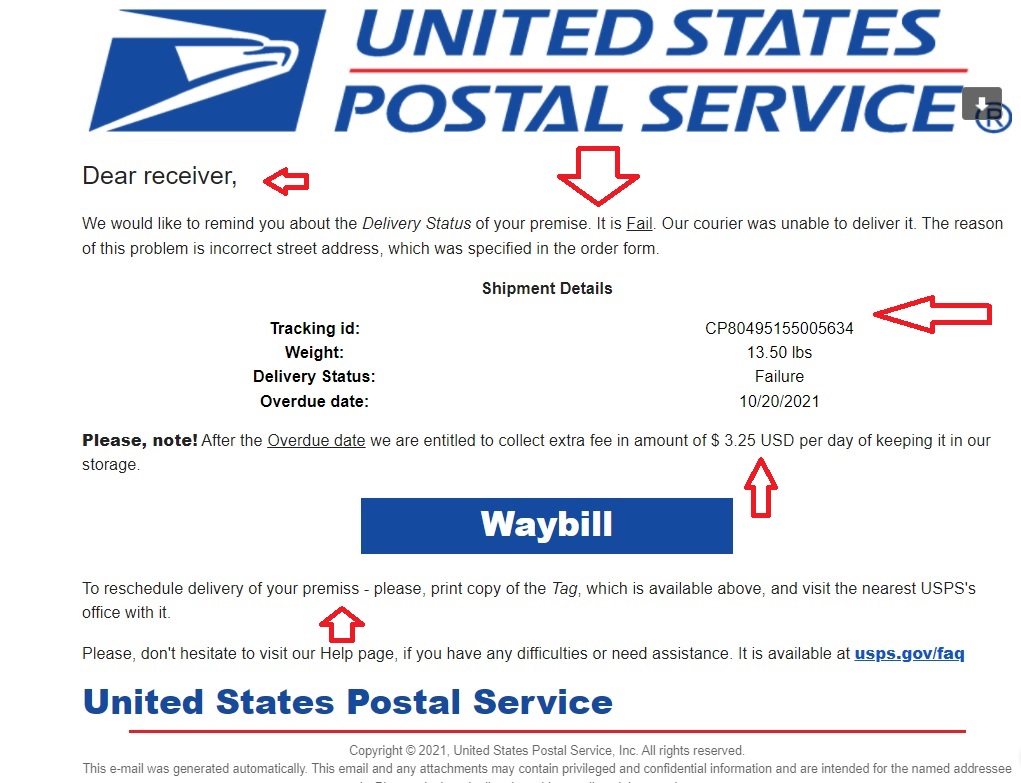 Here are some other points, it isn’t speaking directly to your company, or even your address. And the reply to address is some place not in the country. The tracking ID isn’t even valid. These are important factors when looking at emails like this. When you stop and look at all the facts, it really stands out as a fake email, just trying to get you to click on it. So please, when you get an email that looks fishy, be aware of the fact that it probably is. If you have to ask yourself, is this legit? More often than not, it is indeed not legit at all. If you are still questioning it, and want some reassurance, send us an email here at Webtivity, or give us a call. We’re happy to answer any question you have. But don’t forward the email if you think it’s suspicious, take a screen shot of it, and send us the picture. We don’t want you forwarding any phishing emails. The post Be Aware Of a New Phishing Attempt appeared first on Webtivity Marketing & Design. Read more » | |
|
Nov 25 |
Happy Thanksgiving from Webtivity Marketing & Design
Posted by WDS on 25 November 2020 10:11 pm |
|
It’s the time of year when we usually all gather around a table with our family and friends to celebrate what we’re most thankful. While a lot of us will still be spending time with the immediate family, some of us may have to sacrifice in terms of the number of people we have around the dinner table. It’s not all doom and gloom. With social media and technology in our everyday lives, it’s easier than ever to include the whole family and family friends that usually joins us around the turkey. With video calls like FaceTime, Facebook Messenger, and Zoom, it is possible to see Grandma and the grandkids as we enjoy our holiday meal and give thanks. Here are some helpful tips on how to stay safe during a funky year’s Turkey Day: Sanitize!With the kitchen being the chef-of-the-day’s safe zone, squeezing into the sink may be quite the task. Consider scattering bottles of hand sanitizer around the house for your immediate family members. Designated tablet/computer personWhile meeting with family virtually, there’s potential for many different hands all over the same device. Let’s be smart about how we bring virtual dinner guests to the table by designating one person to operate video calls. This practice should also be considered when sharing a bottle of wine or pitcher of iced tea. Fewer guestsThis is the one we’re all dreading, but desperate times call for desperate measures. Sure, we want all the usual guests over for the holiday, but is the family’s health really worth it? Consider reducing the number of people around the table to keep some wiggle room between each other. Maybe put the kids’ table in an adjoining room. It’s a strange year with sacrifices to be made by all of us. But with vaccines on the horizon, hopefully we’re on our way to Thanksgiving as we remember it. And the efforts we make this year could help ensure that everyone we love is healthy enough to join us for the next one. We wish all of our loyal customers, family, and friends a safe and healthy Thanksgiving! The post Happy Thanksgiving from Webtivity Marketing & Design appeared first on Webtivity Marketing & Design. Read more » | |